
- All
- Product Name
- Product Keyword
- Product Model
- Product Summary
- Product Description
- Multi Field Search
English


Views: 0 Author: Site Editor Publish Time: 2026-03-18 Origin: Site


Customer: Chamber of Commerce and Industry of Côte d’Ivoire (CCI-CI)
Country: Côte d’Ivoire
Region: West Africa
Industry: National Trade Infrastructure, Customs & Transit Supervision
Application:
· Cross-border transit cargo monitoring
· Port-to-border logistics security
· Regional trade corridor supervision
· Revenue protection and anti-smuggling
Solution:
National Electronic Cargo Tracking System (ECTS)
Customer: Chamber of Commerce and Industry of Côte d’Ivoire (CCI-CI)
Country: Côte d’Ivoire
Region: West Africa
Industry: National Trade Infrastructure, Customs & Transit Supervision
Application:
· Cross-border transit cargo monitoring
· Port-to-border logistics security
· Regional trade corridor supervision
· Revenue protection and anti-smuggling
Solution:
National Electronic Cargo Tracking System (ECTS)
As the largest maritime gateway in Francophone West Africa, the Port of Abidjan handles a huge volume of cargo moving toward neighboring countries such as Mali and Burkina Faso.
However, traditional transit supervision faced critical challenges:
· Cargo diversion and unauthorized unloading
· Smuggling and customs revenue leakage
· Paper-based inspection procedures
· Long waiting times at borders
· Limited visibility during transportation
The fundamental question was:
How can a country secure international transit cargo while accelerating regional trade?

JOINTECH deployed a complete ECTS ecosystem integrating:
Thousands of intelligent electronic locks and seals provide:
· Real-time GPS positioning
· Door opening detection
· Route deviation alarms
· Cargo integrity monitoring
The electronic seal becomes a trusted digital identity for every shipment.
The national command platform enables:
· 24/7 cargo visibility
· Real-time alarm management
· Risk-based supervision
· Historical transportation analysis
Customs and regulatory authorities can shift from:
Post-event investigation
Real-time monitoring
Predictive risk management
A successful national ECTS cannot operate independently.
JOINTECH’s solution supports integration with customs digital platforms, including ASYCUDA World, linking:
· Customs declarations
· Electronic seals
· Cargo movement data
· Risk management systems
This creates a complete digital chain from customs clearance to final destination.
The greatest value of Côte d’Ivoire’s ECTS is not only protecting cargo.
It creates the foundation for regional integration.
By establishing trusted digital supervision, the system helps:
· Reduce illegal diversion
· Improve customs efficiency
· Lower logistics costs
· Accelerate border crossings
· Strengthen confidence between neighboring countries
This supports the broader vision of the African Continental Free Trade Area (AfCFTA) and a more connected African market.
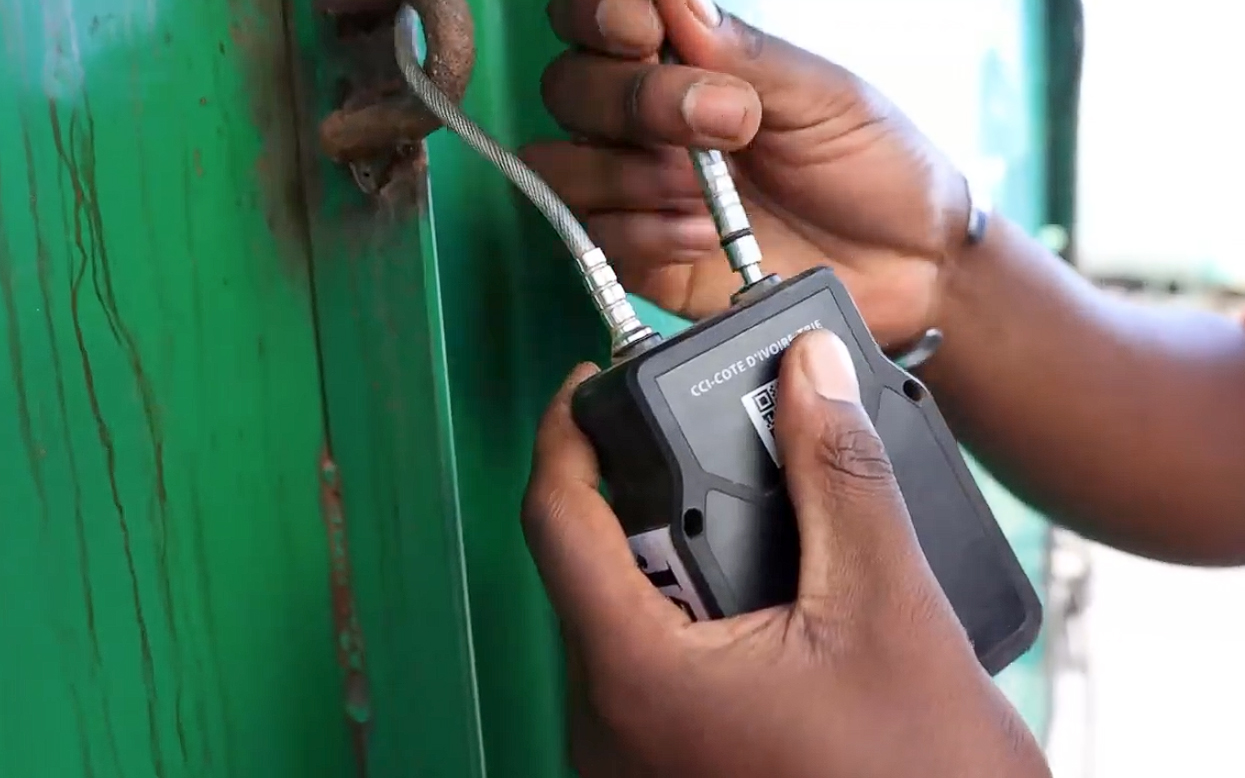
A successful African ECTS requires more than standard GPS tracking.
JOINTECH addressed regional challenges including:
· High humidity
· Heavy rainfall
· Long-distance road transportation
Even in areas with poor cellular coverage, the system can store transportation events and synchronize data when the network is restored.
Multi-factor authentication through RFID and Bluetooth ensures only authorized personnel can perform sealing and unsealing operations.
The evolution of African cargo supervision is moving through three stages:
Manual escort and paper-based verification
Real-time digital supervision of cargo movement
Cross-border interoperability and intelligent cargo management
Côte d’Ivoire represents a critical transition point:
From protecting cargo to building digital trade infrastructure.
With ECTS deployments across multiple African countries, JOINTECH believes the future of regional trade depends on three pillars:
Smart electronic seals transform physical cargo into trusted digital data.
Continuous communication enables complete visibility across thousands of kilometers of transport corridors.
The next generation of ECTS will evolve from tracking cargo to understanding cargo behavior and predicting transportation risks.
It is a nationwide electronic cargo tracking system that uses smart GPS electronic seals and digital monitoring platforms to secure transit cargo moving from ports to neighboring countries.
ECTS reduces cargo diversion, protects government revenue, improves border efficiency, and creates trusted digital trade corridors connecting multiple countries.
GPS electronic seals provide real-time location, tamper detection, route monitoring, and digital transportation records.
By creating transparent and secure cross-border supervision mechanisms, ECTS reduces non-tariff barriers and supports faster movement of goods across Africa.